The original recipe was for the Basic Chocolate Chip Cookies
from Better Homes and Gardens. I changed it slightly (as well as
halved it) because what I had were chocolate covered macadamias and
desiccated coconut!
To be honest, I liked this version better than the regular chocolate chip cookies!
1-1/4 cups all-purpose flour
1/4 teaspoon baking soda
1/4 teaspoon salt
1/3 cup packed brown sugar
1/4 cup granulated sugar
1/2 cup unsalted butter, softened
1 large egg
1/2 teaspoon vanilla extract
1/3 cup desiccated coconut
1 box 7 oz. Hawaiian Host Milk Chocolate Alohamacs, coarsely chopped
Sift together flour, baking soda and salt; set aside.
Cream butter and sugars together. Add the egg and vanilla. Beat well.
Stir in flour mixture. Fold in coconut and chopped chocolate-covered macadamias.
(Chill for about 20 minutes, if desired.)
Drop by rounded tablespoons onto paper-lined cookie sheets, 2 inches apart.
Bake for 12 to 15 minutes, until cookie edges are lightly browned.
Makes about 2 to 2-1/2 dozen cookies.
Showing posts with label coconut. Show all posts
Saturday, June 4, 2016
Monday, January 11, 2016
Himugo
What is himugo?
When I first saw the finished product. I thought it looked a lot like bucayo. But bucayo is a delicacy from Central/Northern Luzon (Pangasinan). It is made by cooking buko (coconut) strips with sugar.
Himugo, on the other hand (as Lola N says), is a sweet delicacy from Panay Island, Visayas, specifically Antique. It is not cooked, but is made by pounding and mixing fresh (young) coconut strips, pinipig and muscovado sugar (and coconut water, if necessary). The ingredients are pounded together until it becomes a sticky mess. It is then shaped and placed on banana leaves.
In our case, the finished product was just placed in an ordinary bowl. And we simply scoop it up with a spoon to eat!
What is the recipe you may ask? (And yes, I did ask Lola N!)
Her reply - ay basta, haluin at dikdikin lang. tikman tapos kung anong kulang, idagdag! (roughly translated - just mix and pound. taste, then add whatever seems lacking!)
Hmmm...
Hmmmmmm...
This is definitely not an easy recipe!
My reply?
Ay basta! Masarap! (Oh well, it's delicious!)
When I first saw the finished product. I thought it looked a lot like bucayo. But bucayo is a delicacy from Central/Northern Luzon (Pangasinan). It is made by cooking buko (coconut) strips with sugar.
Himugo, on the other hand (as Lola N says), is a sweet delicacy from Panay Island, Visayas, specifically Antique. It is not cooked, but is made by pounding and mixing fresh (young) coconut strips, pinipig and muscovado sugar (and coconut water, if necessary). The ingredients are pounded together until it becomes a sticky mess. It is then shaped and placed on banana leaves.
In our case, the finished product was just placed in an ordinary bowl. And we simply scoop it up with a spoon to eat!
What is the recipe you may ask? (And yes, I did ask Lola N!)
Her reply - ay basta, haluin at dikdikin lang. tikman tapos kung anong kulang, idagdag! (roughly translated - just mix and pound. taste, then add whatever seems lacking!)
Hmmm...
Hmmmmmm...
This is definitely not an easy recipe!
My reply?
Ay basta! Masarap! (Oh well, it's delicious!)
Wednesday, June 3, 2015
Hubby's Power Smoothie!
Hubby goes to the gym regularly. And he's a bit of a health buff. So I try to make him healthy stuff to eat.
I've often made smoothies or shakes for hubby (and the little girl), usually using whey or yogurt, whatever fruit is available, and sometimes oats. This one, however, is specifically concocted to be a power drink after hubby's workout session at the gym.
Here's the recipe:
150 grams homemade Greek yogurt
1/2 cup coconut water
1/2 cup buttermilk
1 banana
1 mango (substitute 100 grams strawberries)
1/3 cup oatmeal
1/2 teaspoon wheat germ
1/2 teaspoon chia seeds
1/2 teaspoon minced ginger
Blitz everything in the blender. Makes 2 servings.
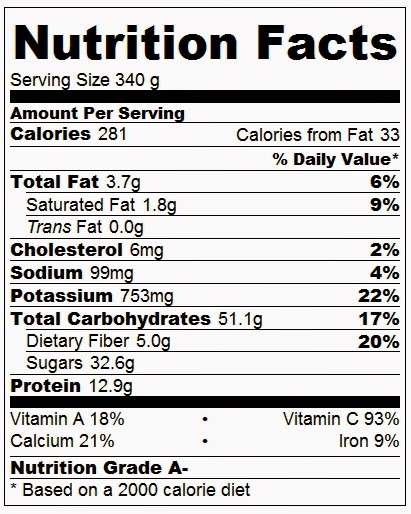
For the nutritional analysis:
Giving credit: the addition of coconut water was suggested by my friend D, who says that (natural) coconut water is high in electrolytes (calcium, magnesium, phosphorous, and potassium) and boosts hydration; it has a high concentration of fiber and tastes great! It also has enzymes that aid in digestion and metabolism; as well as iron, manganese, zinc, B-complex vitamins such as riboflavin, niacin, thiamin,and folate.
As for buttermilk, instead of milk, friend D says that it is high in riboflavin, B12, calcium and protein. It is probiotic, and is cooling to the body.
Ginger is anti-inflammatory.
Oatmeal is full of fiber and protein.
Wheat germ has folate, Vitamin E, and B, potassium and iron, zinc, calcium, potassium, phosphorus, and selenium, as well as omega-3 fatty acids. It is a great antioxidant!
Chia seeds are also high in fiber, protein, omega-3 fatty acids, fiber, anti-oxidants, minerals - calcium, manganese, magnesium, phosphorus, zinc, niacin, potassium, thiamine and vitamin B2.
How's that for healthy?!!?
I've often made smoothies or shakes for hubby (and the little girl), usually using whey or yogurt, whatever fruit is available, and sometimes oats. This one, however, is specifically concocted to be a power drink after hubby's workout session at the gym.
Here's the recipe:
150 grams homemade Greek yogurt
1/2 cup coconut water
1/2 cup buttermilk
1 banana
1 mango (substitute 100 grams strawberries)
1/3 cup oatmeal
1/2 teaspoon wheat germ
1/2 teaspoon chia seeds
1/2 teaspoon minced ginger
Blitz everything in the blender. Makes 2 servings.
For the nutritional analysis:
Giving credit: the addition of coconut water was suggested by my friend D, who says that (natural) coconut water is high in electrolytes (calcium, magnesium, phosphorous, and potassium) and boosts hydration; it has a high concentration of fiber and tastes great! It also has enzymes that aid in digestion and metabolism; as well as iron, manganese, zinc, B-complex vitamins such as riboflavin, niacin, thiamin,and folate.
As for buttermilk, instead of milk, friend D says that it is high in riboflavin, B12, calcium and protein. It is probiotic, and is cooling to the body.
Ginger is anti-inflammatory.
Oatmeal is full of fiber and protein.
Wheat germ has folate, Vitamin E, and B, potassium and iron, zinc, calcium, potassium, phosphorus, and selenium, as well as omega-3 fatty acids. It is a great antioxidant!
Chia seeds are also high in fiber, protein, omega-3 fatty acids, fiber, anti-oxidants, minerals - calcium, manganese, magnesium, phosphorus, zinc, niacin, potassium, thiamine and vitamin B2.
How's that for healthy?!!?
Tuesday, December 23, 2014
Buko Macapuno Salad
I love buko salad. Every Christmas, however, I dismiss it from the
menu, because as Christmas Day draws nearer, the price of buko goes
higher... to the point of being astronomic on Christmas Day itself.
That meant having fruit salad instead.
This morning, however, our friendly neighborhood magbu-buko (coconut vendor, with a rolling cart) came around and offered his wares at 2/3 the usual price (these days, at least). I was tempted but having decided to go fruit (again) this year, I politely refused. He wouldn't take no for an answer, and to show me the error of my choice, he opened one and showed me the lovely buko meat that was just perfect for salad.
(Side note here - when we buy buko we always specify - mala-uhog, pang-salad, or pang-gata. Mala-uhog, or literally "snot-like" or "mucus-like", is from very young coconut. The meat is gelatinous, like the texture of mucus, and is commonly used in desserts and drinks. Pang-salad, literally for salad, is, as the name suggests, best for buko salad. The meat is rather firm but not tough or dry. Pang-gata simply means for coconut milk/cream. The meat is from old or matured coconuts and is really tough. It is so tough that a grating machine is used to grate the meat off the buko shell; it is this grated coconut meat that is used to extract coconut milk or coconut cream.)
Anyway, having seen the pang-salad buko meat, ignoring it was not an option. Quite suddenly, I was struck with longing for buko salad! And, while the timing was not ideal (it was still a few days before Christmas), the chance to have buko salad this season was too good to pass up, especially since I had nata de coco in the pantry, as well as some homemade macapuno preserves!!!!!!!
Presenting... Buko Macapuno Salad!
This is actually a twist on my personal, traditional buko salad...
The recipe is likewise as simple and as easy... even if the measurements are estimations...
coconut meat from 5 buko, the pang-salad type
1 large bottle of nata de coco, drained
half a large bottle of macapuno preserves (mine was homemade!)
2 cups cream, mixed with
1 cup macapuno ice cream
Just toss everything together and chill thoroughly before enjoying!
This morning, however, our friendly neighborhood magbu-buko (coconut vendor, with a rolling cart) came around and offered his wares at 2/3 the usual price (these days, at least). I was tempted but having decided to go fruit (again) this year, I politely refused. He wouldn't take no for an answer, and to show me the error of my choice, he opened one and showed me the lovely buko meat that was just perfect for salad.
(Side note here - when we buy buko we always specify - mala-uhog, pang-salad, or pang-gata. Mala-uhog, or literally "snot-like" or "mucus-like", is from very young coconut. The meat is gelatinous, like the texture of mucus, and is commonly used in desserts and drinks. Pang-salad, literally for salad, is, as the name suggests, best for buko salad. The meat is rather firm but not tough or dry. Pang-gata simply means for coconut milk/cream. The meat is from old or matured coconuts and is really tough. It is so tough that a grating machine is used to grate the meat off the buko shell; it is this grated coconut meat that is used to extract coconut milk or coconut cream.)
Anyway, having seen the pang-salad buko meat, ignoring it was not an option. Quite suddenly, I was struck with longing for buko salad! And, while the timing was not ideal (it was still a few days before Christmas), the chance to have buko salad this season was too good to pass up, especially since I had nata de coco in the pantry, as well as some homemade macapuno preserves!!!!!!!
Presenting... Buko Macapuno Salad!
This is actually a twist on my personal, traditional buko salad...
The recipe is likewise as simple and as easy... even if the measurements are estimations...
coconut meat from 5 buko, the pang-salad type
1 large bottle of nata de coco, drained
half a large bottle of macapuno preserves (mine was homemade!)
2 cups cream, mixed with
1 cup macapuno ice cream
Just toss everything together and chill thoroughly before enjoying!
Thursday, August 29, 2013
Ginataang Kalabasa at Sitaw
Ginataan is a Filipino cooking term that means to cook in coconut
milk. So Ginataang Kalabasa at Sitaw is Squash (kalabasa) and long
beans or pole beans (sitaw) cooked in coconut milk. Like adobo, there's
a myriad of ways to cook this dish - spicy, sweet, salty, with a whole new cast of vegetables, with shrimps,
talangka, crabs, dried fish (daing) or with pork. It can even be a sweet dessert stuffed with rice balls, bananas, yams, taro, sweet potato, langka... the list is practically endless!
In our household, this dish is a favorite such that it's on the table at least once a month! And while the standard is always with some shrimp and ground pork, sometimes we vary the dish depending on our particular mood. The more interesting twists that we've made with this dish was with talangka (small crab, which someone said to be shore crab) and with squash blossoms.
This time, however, we made the dish a little more special by adding bagoong alamang (shrimp paste in English). But the bagoong I used is no ordinary shrimp paste! It's the one made by friend M's mom! In our humble opinion, it is ABSOLUTELY the best one!
The bagoong is used a seasoning and it brings out a different dimension to the dish - a nice contrast of salty to the sweet coconut milk. And it is sooooo goooood!!! Believe it or not, I actually ate the whole dish (see the picture above) all by myself! Yummmm!
The recipe -
3 pieces thinly sliced ginger
1 small onion, minced
2 cloves garlic, lightly smashed
pinch of chili flakes
2 tablespoons bagoong
100 grams ground or thinly sliced pork
100 grams shrimp, cleaned, deveined
about 200 to 300 grams squash, skins removed and cubed
about 200 grams long beans (sitaw), cut into 2-inch lengths
2 bundles bulaklak ng kalabasa (squash blooms), cleaned
1 1/2 to 2 cups coconut milk
1/2 to 1 cup coconut cream
salt and pepper, to taste
Saute ginger until lightly browned. Add garlic and onion and stir fry a few seconds. Sprinkle in the chili flakes and bagoong. Add the pork and stir fry until halfway done. Throw in the shrimp, squash cubes and beans. Stir fry several seconds. Pour in coconut milk and simmer until vegetables are tender, about 10 to 15 minutes, depending on the cut of the squash. It may take as along as 20 to 30 minutes. Add the squash blooms. When the mixture boils, add the coconut cream and bring to boil again. Then season with salt and pepper. Remove from fire. Serve while hot.
Note - the measures are a bit variable depending on personal preference. We prefer a dish with a lot of thick sauce (to pour over rice! Mmmm...) so we use the larger measure. Some people prefer a really thickened, almost no sauce dish, in which case use the lesser measure and cook until the sauce has totally reduced, but note that too long a cooking time may result in the coconut milk/cream to exude its oil (we know someone who prefers that as well!). Take care also that the squash does not get too overcooked that it crumbles and disappears in the sauce. Personally, we no longer add salt when we use the bagoong, but this may depend on the bagoong as they are not created equal - some bagoong are saltier than others, and there are sweet and/or spicy variants.
In our household, this dish is a favorite such that it's on the table at least once a month! And while the standard is always with some shrimp and ground pork, sometimes we vary the dish depending on our particular mood. The more interesting twists that we've made with this dish was with talangka (small crab, which someone said to be shore crab) and with squash blossoms.
This time, however, we made the dish a little more special by adding bagoong alamang (shrimp paste in English). But the bagoong I used is no ordinary shrimp paste! It's the one made by friend M's mom! In our humble opinion, it is ABSOLUTELY the best one!
The bagoong is used a seasoning and it brings out a different dimension to the dish - a nice contrast of salty to the sweet coconut milk. And it is sooooo goooood!!! Believe it or not, I actually ate the whole dish (see the picture above) all by myself! Yummmm!
The recipe -
3 pieces thinly sliced ginger
1 small onion, minced
2 cloves garlic, lightly smashed
pinch of chili flakes
2 tablespoons bagoong
100 grams ground or thinly sliced pork
100 grams shrimp, cleaned, deveined
about 200 to 300 grams squash, skins removed and cubed
about 200 grams long beans (sitaw), cut into 2-inch lengths
2 bundles bulaklak ng kalabasa (squash blooms), cleaned
1 1/2 to 2 cups coconut milk
1/2 to 1 cup coconut cream
salt and pepper, to taste
Saute ginger until lightly browned. Add garlic and onion and stir fry a few seconds. Sprinkle in the chili flakes and bagoong. Add the pork and stir fry until halfway done. Throw in the shrimp, squash cubes and beans. Stir fry several seconds. Pour in coconut milk and simmer until vegetables are tender, about 10 to 15 minutes, depending on the cut of the squash. It may take as along as 20 to 30 minutes. Add the squash blooms. When the mixture boils, add the coconut cream and bring to boil again. Then season with salt and pepper. Remove from fire. Serve while hot.
Note - the measures are a bit variable depending on personal preference. We prefer a dish with a lot of thick sauce (to pour over rice! Mmmm...) so we use the larger measure. Some people prefer a really thickened, almost no sauce dish, in which case use the lesser measure and cook until the sauce has totally reduced, but note that too long a cooking time may result in the coconut milk/cream to exude its oil (we know someone who prefers that as well!). Take care also that the squash does not get too overcooked that it crumbles and disappears in the sauce. Personally, we no longer add salt when we use the bagoong, but this may depend on the bagoong as they are not created equal - some bagoong are saltier than others, and there are sweet and/or spicy variants.
Labels:
bagoong,
beans,
coconut,
coconut cream,
coconut milk,
Filipino,
ginataan,
kalabasa,
pork,
shrimp,
sitaw,
squash
Subscribe to:
Posts (Atom)