I really like it when the tindera (saleslady) at the market knows her product/s well.
We went to the weekend market to buy specific items, quickly finishing our errands and heading out into the parking lot when a tindera called my attention to her wares... Fiddlehead ferns, or pako in the vernacular. I politely declined, saying that we were not in the mood for salad (which is the usual way that I know). The tindera then informed me (with a slight indignation, I might add) that the pako can be prepared and cooked many other ways... sauteed with shrimps or dried fish, or simply with butter and garlic; as part of a ginataan (coconut cream) dish, especially crabs (!); or an elegant omelette... that did it - I bought a bundle! I wanted to make pako omelette!
First step, as always, is to trim the ferns from the stems. The second step is to blanch the ferns briefly and then put them in an ice bath. The last step in preparation is to dry to the ferns thoroughly. Only then are the ferns ready.
Saute about 3 large cloves of garlic, grated, in about 1/4 cup of salted butter. Set aside when done.
Meanwhile, beat 6 extra large eggs with 3 tablespoons of whipping cream and a large pinch of salt (or to taste). Pour into a skillet (at least 10 inches, preferably 12 inches) and cook over medium heat. Lift the edges of the omelette to let uncooked eggs slide underneath.
When the top of the omelette is almost set, place the sauteed fern tips in the middle and top with slices of white cheese (the local kesong puti is best).
Fold one side of the omelettle over...
Then fold the other side...
Transfer (carefully) to a serving platter and serve!
We found this dish to be super delicious, with the ferns still crunchy! Now I can't wait to buy more ferns next weekend and prepare a ginataan dish... I hope I can find decently priced crabs as well!
Tuesday, June 23, 2015
Friday, June 19, 2015
Dumplings with Soy Ginger Dipping Sauce
Hubby
I and love dumplings. Call a cultural thing, but it is a staple in our
household. Once in a while I make the dumplings we eat (with a mixture
of pork and shrimp) but truthfully, it is so convenient to buy,
especially since we found a source for really delicious and (allegedly)
no-MSG ones!
But just as important as the dumplings is the dipping sauce... which, in our case, is poured over the dumplings!
My usual recipe -
1/2 cup light soya sauce
1/4 cup hot water, as preferred, or optional
1 tablespoon Shaoxing wine or rice wine vinegar
2 tablespoons grated ginger
2 cloves garlic, minced
chopped green onions, optional
1 teaspoon sugar
1 teaspoon sesame oil
Just mix everything together.
Take note, however, that the quality of the soy sauce counts. Sometimes when the soy sauce is too salty I temper it with hot water. To make the dip spicy, add chili oil, to taste.
But just as important as the dumplings is the dipping sauce... which, in our case, is poured over the dumplings!
My usual recipe -
1/2 cup light soya sauce
1/4 cup hot water, as preferred, or optional
1 tablespoon Shaoxing wine or rice wine vinegar
2 tablespoons grated ginger
2 cloves garlic, minced
chopped green onions, optional
1 teaspoon sugar
1 teaspoon sesame oil
Just mix everything together.
Take note, however, that the quality of the soy sauce counts. Sometimes when the soy sauce is too salty I temper it with hot water. To make the dip spicy, add chili oil, to taste.
Monday, June 15, 2015
Talaba, Tokwa at Tausi
(in English: Oysters, Tofu and Fermented Soy Beans)
As always I could not resist buying oysters (talaba in the vernacular)! Especially those that were fresh, and really big! But alas, it was the last of the batch and came up only about 350 grams. It was certainly not enough for dinner - we were 5, with rather big appetites! What to do then?
Tokwa (firm tofu) to the rescue!
The recipe is very easy too!
Rinse 350 grams of shucked oysters and drain lightly. Meanwhile, slice 2 to 3 blocks of very firm tofu (tokwa in the vernacular) into cubes roughly the same size as the talaba; set aside. Slice 3 to 4 stalks of leeks into thin, diagonal slices; separate the white part from the green part. Prepare a tablespoon (or more depending on your taste and the brand) of tausi, or fermented black beans; lightly crush with a fork. Prepare a few slices of ginger.
Saute the ginger and white part of the leeks until softened then add the tausi. Stir fry a few seconds then throw in the tokwa cubes; stir the pot. When the tokwa takes on the color of the tausi, add the oysters. Cook briefly, until the oysters are just cooked. Season to taste; personally I did not have to since the tausi has a lot of flavor and saltiness already! If there is a lot of liquid, thicken with cornstarch slurry. Garnish with the green part of the leeks and serve. It's great as rice topping!
As always I could not resist buying oysters (talaba in the vernacular)! Especially those that were fresh, and really big! But alas, it was the last of the batch and came up only about 350 grams. It was certainly not enough for dinner - we were 5, with rather big appetites! What to do then?
Tokwa (firm tofu) to the rescue!
The recipe is very easy too!
Rinse 350 grams of shucked oysters and drain lightly. Meanwhile, slice 2 to 3 blocks of very firm tofu (tokwa in the vernacular) into cubes roughly the same size as the talaba; set aside. Slice 3 to 4 stalks of leeks into thin, diagonal slices; separate the white part from the green part. Prepare a tablespoon (or more depending on your taste and the brand) of tausi, or fermented black beans; lightly crush with a fork. Prepare a few slices of ginger.
Saute the ginger and white part of the leeks until softened then add the tausi. Stir fry a few seconds then throw in the tokwa cubes; stir the pot. When the tokwa takes on the color of the tausi, add the oysters. Cook briefly, until the oysters are just cooked. Season to taste; personally I did not have to since the tausi has a lot of flavor and saltiness already! If there is a lot of liquid, thicken with cornstarch slurry. Garnish with the green part of the leeks and serve. It's great as rice topping!
Thursday, June 11, 2015
Singapore-style Chili Crab
Whenever we are lucky to have fresh, live crabs, my favorite dish to
cook is crab sotanghon. But this time around, I asked hubby his
preference and (I shouldn't have asked since I know) he wants crabs very
spicy, Singaporean style.
I "extended" the dish by adding suahe (live shrimps), but scaled the recipe to half.
For this particular dish, I used the recipe in this book...
found on page 19
It was really, really spicy! But delicious!
I "extended" the dish by adding suahe (live shrimps), but scaled the recipe to half.
For this particular dish, I used the recipe in this book...
found on page 19
It was really, really spicy! But delicious!
Sunday, June 7, 2015
KBL
KBL refers to an Ilonggo dish - kadyos, baboy at langka (pigeon peas,
pork and jackfruit), although in this particular case, the baboy/pork
is lechon! Friend C was generous and brought some (a lot, actually)
lechon for dinner a couple of nights ago. We ate a third of it, made
lechon paksiw with another third, and for the final third...
Usually the pork used in the dish is the "pata" part or the leg part. While the pata makes a tasty dish, I believe using lechon, Cebu-style lechon, in particular, takes this dish up another level!
The souring agent for this particular dish is called batwan. I honestly do not know what it is in English or if the word is even Filipino! What I do know is that this batwan is responsible for the Ilonggo dinuguan's superb and superior flavor (in my opinion!) It is even rumored to be the secret ingredient to an authentic Inasal!
It isn't easy to find butwan, however, so far I've seen it only in my mom's native province, Iloilo. Sampaloc can be substituted, but truth is, it's not the same!
Here's the recipe:
3 cloves garlic, minced finely
1 medium onion, sliced
1 medium tomato, sliced
1 kilo lechon meat (pork)
3/4 cup kadyos (pigeon peas), more if preferred
1 piece lemongrass, tied in a bundle
broth, or water, as needed
250 grams unrirpe, sliced langka/jackfruit
3 to 4 pieces batwan (or substitute sampaloc/tamarind)
Rinse the kadyos in water, then cook until softened, about 20 minutes. Drain.
Sauté garlic, onion, and tomato in a little canola oil. Add the pigeon peas, lemongrass, langka and lechon. Pour in enough water to cover everything. Bring to a boil then season to taste. When the langka has softened, add the batwan and simmer another 10 to 15 minutes.
Usually the pork used in the dish is the "pata" part or the leg part. While the pata makes a tasty dish, I believe using lechon, Cebu-style lechon, in particular, takes this dish up another level!
The souring agent for this particular dish is called batwan. I honestly do not know what it is in English or if the word is even Filipino! What I do know is that this batwan is responsible for the Ilonggo dinuguan's superb and superior flavor (in my opinion!) It is even rumored to be the secret ingredient to an authentic Inasal!
It isn't easy to find butwan, however, so far I've seen it only in my mom's native province, Iloilo. Sampaloc can be substituted, but truth is, it's not the same!
Here's the recipe:
3 cloves garlic, minced finely
1 medium onion, sliced
1 medium tomato, sliced
1 kilo lechon meat (pork)
3/4 cup kadyos (pigeon peas), more if preferred
1 piece lemongrass, tied in a bundle
broth, or water, as needed
250 grams unrirpe, sliced langka/jackfruit
3 to 4 pieces batwan (or substitute sampaloc/tamarind)
Rinse the kadyos in water, then cook until softened, about 20 minutes. Drain.
Sauté garlic, onion, and tomato in a little canola oil. Add the pigeon peas, lemongrass, langka and lechon. Pour in enough water to cover everything. Bring to a boil then season to taste. When the langka has softened, add the batwan and simmer another 10 to 15 minutes.
Wednesday, June 3, 2015
Hubby's Power Smoothie!
Hubby goes to the gym regularly. And he's a bit of a health buff. So I try to make him healthy stuff to eat.
I've often made smoothies or shakes for hubby (and the little girl), usually using whey or yogurt, whatever fruit is available, and sometimes oats. This one, however, is specifically concocted to be a power drink after hubby's workout session at the gym.
Here's the recipe:
150 grams homemade Greek yogurt
1/2 cup coconut water
1/2 cup buttermilk
1 banana
1 mango (substitute 100 grams strawberries)
1/3 cup oatmeal
1/2 teaspoon wheat germ
1/2 teaspoon chia seeds
1/2 teaspoon minced ginger
Blitz everything in the blender. Makes 2 servings.
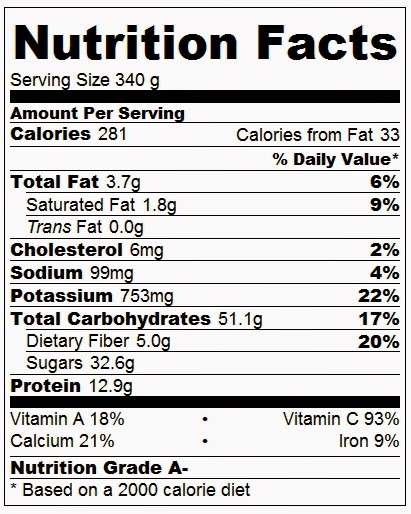
For the nutritional analysis:
Giving credit: the addition of coconut water was suggested by my friend D, who says that (natural) coconut water is high in electrolytes (calcium, magnesium, phosphorous, and potassium) and boosts hydration; it has a high concentration of fiber and tastes great! It also has enzymes that aid in digestion and metabolism; as well as iron, manganese, zinc, B-complex vitamins such as riboflavin, niacin, thiamin,and folate.
As for buttermilk, instead of milk, friend D says that it is high in riboflavin, B12, calcium and protein. It is probiotic, and is cooling to the body.
Ginger is anti-inflammatory.
Oatmeal is full of fiber and protein.
Wheat germ has folate, Vitamin E, and B, potassium and iron, zinc, calcium, potassium, phosphorus, and selenium, as well as omega-3 fatty acids. It is a great antioxidant!
Chia seeds are also high in fiber, protein, omega-3 fatty acids, fiber, anti-oxidants, minerals - calcium, manganese, magnesium, phosphorus, zinc, niacin, potassium, thiamine and vitamin B2.
How's that for healthy?!!?
I've often made smoothies or shakes for hubby (and the little girl), usually using whey or yogurt, whatever fruit is available, and sometimes oats. This one, however, is specifically concocted to be a power drink after hubby's workout session at the gym.
Here's the recipe:
150 grams homemade Greek yogurt
1/2 cup coconut water
1/2 cup buttermilk
1 banana
1 mango (substitute 100 grams strawberries)
1/3 cup oatmeal
1/2 teaspoon wheat germ
1/2 teaspoon chia seeds
1/2 teaspoon minced ginger
Blitz everything in the blender. Makes 2 servings.
For the nutritional analysis:
Giving credit: the addition of coconut water was suggested by my friend D, who says that (natural) coconut water is high in electrolytes (calcium, magnesium, phosphorous, and potassium) and boosts hydration; it has a high concentration of fiber and tastes great! It also has enzymes that aid in digestion and metabolism; as well as iron, manganese, zinc, B-complex vitamins such as riboflavin, niacin, thiamin,and folate.
As for buttermilk, instead of milk, friend D says that it is high in riboflavin, B12, calcium and protein. It is probiotic, and is cooling to the body.
Ginger is anti-inflammatory.
Oatmeal is full of fiber and protein.
Wheat germ has folate, Vitamin E, and B, potassium and iron, zinc, calcium, potassium, phosphorus, and selenium, as well as omega-3 fatty acids. It is a great antioxidant!
Chia seeds are also high in fiber, protein, omega-3 fatty acids, fiber, anti-oxidants, minerals - calcium, manganese, magnesium, phosphorus, zinc, niacin, potassium, thiamine and vitamin B2.
How's that for healthy?!!?
Saturday, May 30, 2015
No Churn Chocolate Chip Chocolate Ice Cream
For the little girl... who has requested, repeatedly for several days now, chocolate ice cream with chocolate chips in it.
This recipe was given to me by an e-friend, who gave me permission to share...
1/2 cup chocolate milk
1/2 cup condensed milk
1/3 cup Dutch style cocoa
300 ml heavy 40% cream
3 to 5 tablespoons mini chocolate chips
Stir together the chocolate milk, condensed milk and cocoa until thoroughly mixed. Chill for a couple of hours.
Whip the cream until stiff peaks. Fold in the chocolate-milk mixture.
Pour into prepared container (about 1 liter capacity). Freeze for 1 to 2 hours, until sides begin to freeze but center is still a bit liquid-y. Stir the mixture then fold in chocolate chips. Freeze until solid.
The little girl obviously loved her ice cream. It was delicious, although I found it a tad a bit on the sweet side. It's a little sweeter, particularly the end-note, than my go-to homemade chocolate ice cream, but it is darker and has a more complex chocolate-y taste, maybe due to chocolate milk component.
In any case, the little girl pronounced me her (kitchen) hero once again!
This recipe was given to me by an e-friend, who gave me permission to share...
1/2 cup chocolate milk
1/2 cup condensed milk
1/3 cup Dutch style cocoa
300 ml heavy 40% cream
3 to 5 tablespoons mini chocolate chips
Stir together the chocolate milk, condensed milk and cocoa until thoroughly mixed. Chill for a couple of hours.
Whip the cream until stiff peaks. Fold in the chocolate-milk mixture.
Pour into prepared container (about 1 liter capacity). Freeze for 1 to 2 hours, until sides begin to freeze but center is still a bit liquid-y. Stir the mixture then fold in chocolate chips. Freeze until solid.
The little girl obviously loved her ice cream. It was delicious, although I found it a tad a bit on the sweet side. It's a little sweeter, particularly the end-note, than my go-to homemade chocolate ice cream, but it is darker and has a more complex chocolate-y taste, maybe due to chocolate milk component.
In any case, the little girl pronounced me her (kitchen) hero once again!
Subscribe to:
Posts (Atom)